
 English
  French
  German
  Spanish
  Hindi
Hindi  Italian
  Japanese
  Korean
  Norwegian
  Chinese
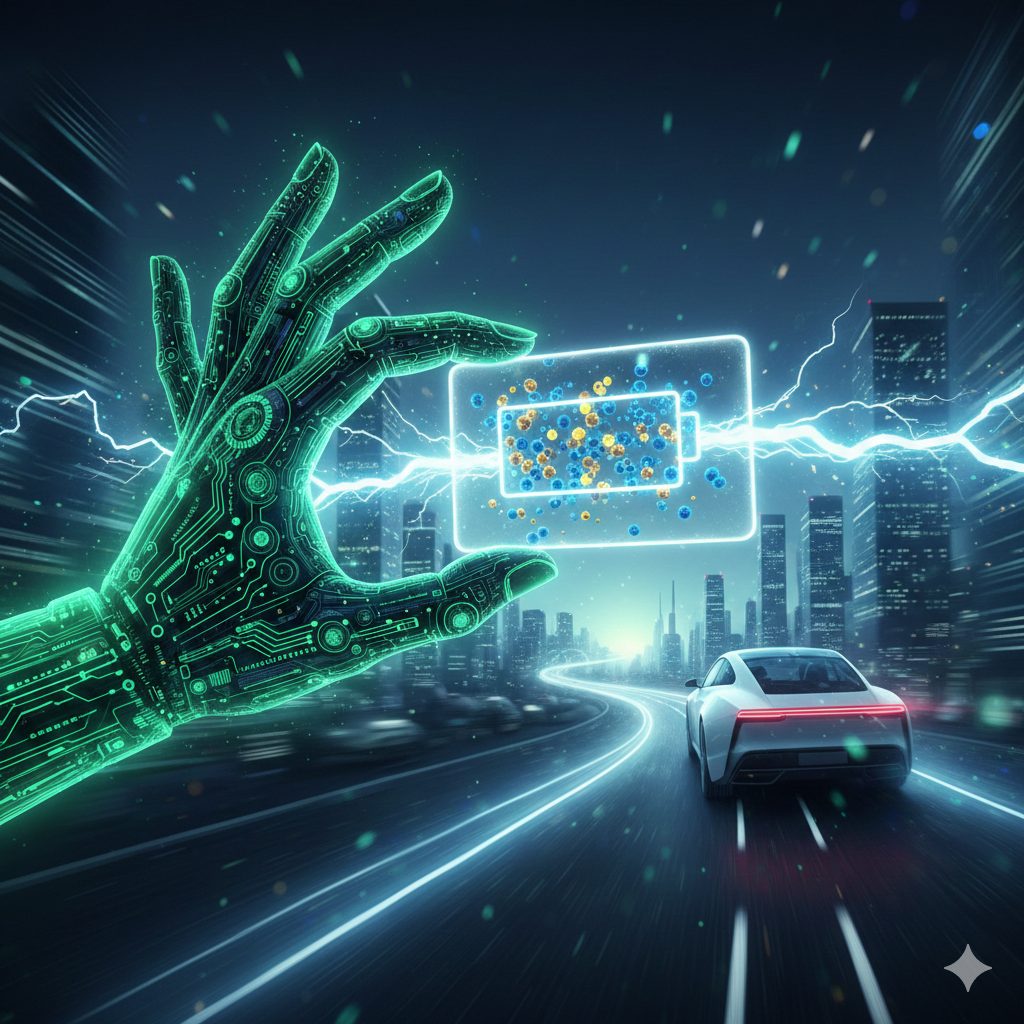
Solid-State Batteries: The European Record That Changes Everything for Electric Cars
The year 2025 concludes with a historic breakthrough for the energy transition. While doubts persisted about the commercial viability of solid-state batteries, the European consortium EuroBattery NextGen has just confirmed crossing the critical threshold of 500 Wh/kg under real-world conditions. This announcement marks a decisive turning point for global electric mobility.
Unlike conventional lithium-ion batteries that use a liquid electrolyte, this new generation relies on an innovative ceramic compound. This structure virtually eliminates fire risks while enabling an energy density twice that of current standards. In practical terms, this means we will soon be able to travel more than 1,000 kilometers on a single charge, without adding to the vehicle's weight.
Why is this a revolution?
The main barrier to widespread electric adoption remains range anxiety and charging time. With this technology, laboratory tests demonstrate a charging capacity from 10% to 80% in just 6 minutes. That is the equivalent of a traditional fuel fill-up, removing one of the last psychological barriers for consumers.
The environmental dimension is equally significant. The consortium specified that this new prototype reduces the use of cobalt and nickel by nearly 40%. By exploiting more abundant and easily recyclable materials, Europe hopes not only to reduce its carbon footprint but also to regain industrial sovereignty in the face of Asian giants who currently dominate the chemical components market.
However, the challenge remains one of industrialization. Moving from a laboratory prototype to mass production requires transforming entire assembly lines. The first pilot plants are expected to open in Germany and northern France as early as the second quarter of 2026. If production costs fall as projected, experts estimate that electric vehicle prices could align with those of combustion engine vehicles within less than three years.



Solid-State Batteries: The European Record That Changes Everything for Electric Cars
The year 2025 concludes with a historic breakthrough for the energy transition. While doubts persisted about the commercial viability of solid-state batteries, the European consortium EuroBattery NextGen has just confirmed crossing the critical threshold of 500 Wh/kg under real-world conditions. This announcement marks a decisive turning point for global electric mobility.
Unlike conventional lithium-ion batteries that use a liquid electrolyte, this new generation relies on an innovative ceramic compound. This structure virtually eliminates fire risks while enabling an energy density twice that of current standards. In practical terms, this means we will soon be able to travel more than 1,000 kilometers on a single charge, without adding to the vehicle's weight.
Why is this a revolution?
The main barrier to widespread electric adoption remains range anxiety and charging time. With this technology, laboratory tests demonstrate a charging capacity from 10% to 80% in just 6 minutes. That is the equivalent of a traditional fuel fill-up, removing one of the last psychological barriers for consumers.
The environmental dimension is equally significant. The consortium specified that this new prototype reduces the use of cobalt and nickel by nearly 40%. By exploiting more abundant and easily recyclable materials, Europe hopes not only to reduce its carbon footprint but also to regain industrial sovereignty in the face of Asian giants who currently dominate the chemical components market.
However, the challenge remains one of industrialization. Moving from a laboratory prototype to mass production requires transforming entire assembly lines. The first pilot plants are expected to open in Germany and northern France as early as the second quarter of 2026. If production costs fall as projected, experts estimate that electric vehicle prices could align with those of combustion engine vehicles within less than three years.
Solid-State Batteries: The European Record That Changes Everything for Electric Cars
The year 2025 concludes with a historic breakthrough for the energy transition. While doubts persisted about the commercial viability of solid-state batteries, the European consortium EuroBattery NextGen has just confirmed crossing the critical threshold of 500 Wh/kg under real-world conditions. This announcement marks a decisive turning point for global electric mobility.
Unlike conventional lithium-ion batteries that use a liquid electrolyte, this new generation relies on an innovative ceramic compound. This structure virtually eliminates fire risks while enabling an energy density twice that of current standards. In practical terms, this means we will soon be able to travel more than 1,000 kilometers on a single charge, without adding to the vehicle's weight.
Why is this a revolution?
The main barrier to widespread electric adoption remains range anxiety and charging time. With this technology, laboratory tests demonstrate a charging capacity from 10% to 80% in just 6 minutes. That is the equivalent of a traditional fuel fill-up, removing one of the last psychological barriers for consumers.
The environmental dimension is equally significant. The consortium specified that this new prototype reduces the use of cobalt and nickel by nearly 40%. By exploiting more abundant and easily recyclable materials, Europe hopes not only to reduce its carbon footprint but also to regain industrial sovereignty in the face of Asian giants who currently dominate the chemical components market.
However, the challenge remains one of industrialization. Moving from a laboratory prototype to mass production requires transforming entire assembly lines. The first pilot plants are expected to open in Germany and northern France as early as the second quarter of 2026. If production costs fall as projected, experts estimate that electric vehicle prices could align with those of combustion engine vehicles within less than three years.