
 English
  French
  German
  Spanish
  Hindi
Hindi  Italian
  Japanese
  Korean
  Norwegian
  Chinese
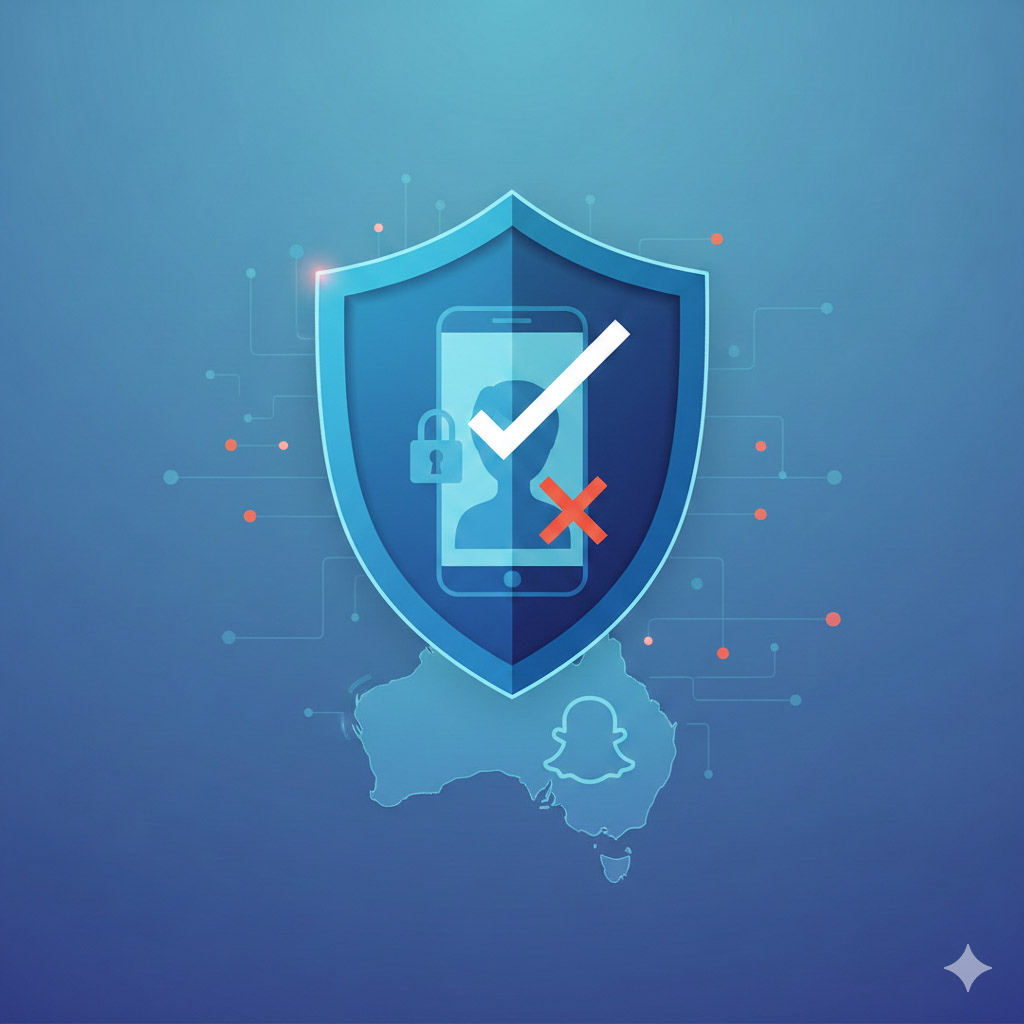
Snapchat Gets Ahead of the Law: Age Verification Required Before Australia's Under-16 Ban
Australia is on the verge of marking a decisive milestone in the regulation of digital platforms. Even before its law banning social media for under-16s comes into force, tech giant Snapchat has taken the lead by imposing strict age verification for its new Australian users. This initiative, while potentially controversial, highlights the growing pressure from governments to protect young people online.
The Legislative Context: The Australian law is currently being developed and aims to make it illegal for children under the age of 16 to use social media — a radical measure that positions Australia as a global pioneer in digital safety for minors.
Age verification on Snapchat is not simply a checkbox to tick. It now requires verifiable proof of identity, ensuring the user meets the minimum age requirement to access the service. For the platform, this is a proactive way to align with future requirements and demonstrate a responsible stance in the face of growing parental concerns about screen time, cyberbullying, and exposure to inappropriate content.
The implications of this move are multiple. On one hand, it has been welcomed by children's rights groups who see it as an effective tool for creating a safer online environment. On the other, it raises important questions about data privacy. The collection and storage of identity documents for verification represents a major security challenge that Snapchat will need to manage with the utmost transparency.
This move in Australia could well serve as a model for other countries. If the Australian law is passed and self-regulatory measures by platforms like Snapchat prove effective, we could see a wave of similar regulations across Europe and North America. The era of free and unsupervised access by minors to social platforms appears to be drawing to a close, signaling a paradigm shift in internet governance.



Snapchat Gets Ahead of the Law: Age Verification Required Before Australia's Under-16 Ban
Australia is on the verge of marking a decisive milestone in the regulation of digital platforms. Even before its law banning social media for under-16s comes into force, tech giant Snapchat has taken the lead by imposing strict age verification for its new Australian users. This initiative, while potentially controversial, highlights the growing pressure from governments to protect young people online.
The Legislative Context: The Australian law is currently being developed and aims to make it illegal for children under the age of 16 to use social media — a radical measure that positions Australia as a global pioneer in digital safety for minors.
Age verification on Snapchat is not simply a checkbox to tick. It now requires verifiable proof of identity, ensuring the user meets the minimum age requirement to access the service. For the platform, this is a proactive way to align with future requirements and demonstrate a responsible stance in the face of growing parental concerns about screen time, cyberbullying, and exposure to inappropriate content.
The implications of this move are multiple. On one hand, it has been welcomed by children's rights groups who see it as an effective tool for creating a safer online environment. On the other, it raises important questions about data privacy. The collection and storage of identity documents for verification represents a major security challenge that Snapchat will need to manage with the utmost transparency.
This move in Australia could well serve as a model for other countries. If the Australian law is passed and self-regulatory measures by platforms like Snapchat prove effective, we could see a wave of similar regulations across Europe and North America. The era of free and unsupervised access by minors to social platforms appears to be drawing to a close, signaling a paradigm shift in internet governance.
Snapchat Gets Ahead of the Law: Age Verification Required Before Australia's Under-16 Ban
Australia is on the verge of marking a decisive milestone in the regulation of digital platforms. Even before its law banning social media for under-16s comes into force, tech giant Snapchat has taken the lead by imposing strict age verification for its new Australian users. This initiative, while potentially controversial, highlights the growing pressure from governments to protect young people online.
The Legislative Context: The Australian law is currently being developed and aims to make it illegal for children under the age of 16 to use social media — a radical measure that positions Australia as a global pioneer in digital safety for minors.
Age verification on Snapchat is not simply a checkbox to tick. It now requires verifiable proof of identity, ensuring the user meets the minimum age requirement to access the service. For the platform, this is a proactive way to align with future requirements and demonstrate a responsible stance in the face of growing parental concerns about screen time, cyberbullying, and exposure to inappropriate content.
The implications of this move are multiple. On one hand, it has been welcomed by children's rights groups who see it as an effective tool for creating a safer online environment. On the other, it raises important questions about data privacy. The collection and storage of identity documents for verification represents a major security challenge that Snapchat will need to manage with the utmost transparency.
This move in Australia could well serve as a model for other countries. If the Australian law is passed and self-regulatory measures by platforms like Snapchat prove effective, we could see a wave of similar regulations across Europe and North America. The era of free and unsupervised access by minors to social platforms appears to be drawing to a close, signaling a paradigm shift in internet governance.